

KwikBill - Restaurant Technology
Billing that keeps working, even when the internet doesn't.
An offline-first restaurant operations ecosystem spanning desktop software, mobile applications and backend infrastructure.
- Industry
- Hospitality · Retail Operations
- Services
- Product EngineeringDigital TransformationAutomationData Services
- Platform
- Desktop · Mobile · Backend
- Technology
- Flutter · Golang · PostgreSQL · Redis · Kafka · SQLite
KwikBill is a restaurant operations platform covering the work that happens between a customer sitting down and a bill being settled: orders, tables, kitchen tickets, invoicing and the sales record that follows.
It runs as Flutter desktop software at the billing counter, as mobile applications for staff working the floor, and on a Golang backend that keeps the two in step and holds the operational record.
The defining engineering decision is that the counter does not depend on the internet to do its job. Billing is designed to continue locally when connectivity drops, because in a restaurant that constraint is not hypothetical. It is a Friday evening.
The challenge
Most restaurant software assumes a working connection. That assumption is comfortable to build against and expensive to rely on. Connectivity in a busy restaurant is genuinely unreliable: shared consumer broadband, a router behind the kitchen, congestion exactly when the room is full.
When cloud-dependent billing software loses its connection, service stops. Staff fall back to paper, the digital record develops a gap, and someone reconciles it afterwards from memory. The cost is not the outage; it is the operational damage and the loss of trust in the system that follows it.
Building for that meant accepting a harder problem: an ecosystem spanning desktop, mobile and backend where the critical path continues locally, and where reconnecting restores a coherent record rather than a conflict to be untangled by hand.
Connectivity cannot be a dependency
Billing is the one workflow that must never stop. If it requires the network, the product fails on exactly the nights that matter most.
Multiple devices, one operational picture
Counter software and floor devices act on the same orders and tables, and must stay coherent with each other.
Speed at the counter
Billing happens in front of a waiting customer. Interface latency is felt directly by the guest.
Breadth of a real operation
Orders, tables, kitchen tickets, invoicing, stock and sales reporting are one continuous workflow, not separate modules.
The approach
We inverted the usual assumption. Rather than treating offline as a degraded state to fall back into, the local device is where billing actually happens. SQLite on the client holds the data the counter needs, and the workflow reads and writes there first.
Connectivity then becomes what it should be: the mechanism that keeps devices and the backend in agreement, rather than a precondition for taking payment. When the connection is there, work flows to the backend continuously. When it isn't, the counter does not notice, and the record catches up when the link returns.
Flutter let one team build both the desktop counter software and the mobile applications for floor staff with a shared codebase, which matters when the same order and table concepts must behave identically on every surface. Golang runs the backend, with PostgreSQL as the operational record, Redis for fast-access data, and Kafka carrying asynchronous messaging between backend components.
What we delivered
An integrated restaurant operations ecosystem: Flutter desktop software at the counter, mobile applications for staff on the floor, and a Golang backend holding the operational record across both.
Billing continues locally without a connection, and the platform covers the full service workflow rather than billing alone.
Desktop billing software
Flutter desktop application at the counter, built to keep operating through connectivity loss.
Mobile applications
Order taking and floor workflows on mobile devices, working against the same operational model.
Backend infrastructure
Golang services with PostgreSQL, Redis and Kafka behind the operational record.
Local data layer
SQLite on the client as part of the offline data architecture supporting local billing.
How the platform is put together.
Offline-first client architecture
The counter reads and writes locally first. That is what allows billing to continue when the connection does not: the backend keeps devices in agreement rather than gating the workflow.
- Client
Desktop Software
Flutter
Billing counter application
Mobile Applications
Flutter
Floor and order-taking workflows
- Local
Local Data Layer
SQLite
On-device data supporting billing without connectivity
- Backend
Application Services
Golang
Operational services and synchronisation
- Data
PostgreSQL
Operational and transactional records
Redis
Caching and fast-access data
Kafka
Asynchronous messaging between backend services
A simplified view of the platform's structure, not a complete deployment topology.
Offline-first is not a technical curiosity here. It is the difference between software that works in a demonstration and software that works on a Friday night.
The counter never stops
Billing runs against local data on the device. If the connection drops mid-service, staff carry on taking orders and issuing bills. There is no error state to work around and no fallback to paper.
Local-first data architecture
SQLite holds the data the counter needs to operate independently. The local database is part of the design, not a cache bolted on afterwards.
Connectivity as synchronisation, not permission
The network keeps devices and backend in agreement. It is not something the billing workflow has to ask permission from before proceeding.
Resilience as a business outcome
The value delivered is not an architecture diagram. It is that service continues, the record stays complete, and nobody reconstructs the evening's takings afterwards.
Offline billing
Critical billing operations continue on the device without an internet connection.
Order management
Orders captured and tracked through service across counter and floor devices.
Table management
Table state maintained across the room as part of the live service workflow.
KOT workflows
Kitchen order tickets moving from order capture through to the kitchen.
Invoice generation
Bills and invoices produced at the counter as part of the billing flow.
Sales tracking
Sales recorded and reportable across the operation.
Multi-device workflows
Desktop counter software and mobile devices operating against one coherent picture.
Desktop and mobile delivery
One Flutter codebase spanning desktop software and mobile applications.
Floor workflows, kitchen dispatch, order history and operational reporting, as they appear on the counter terminal.
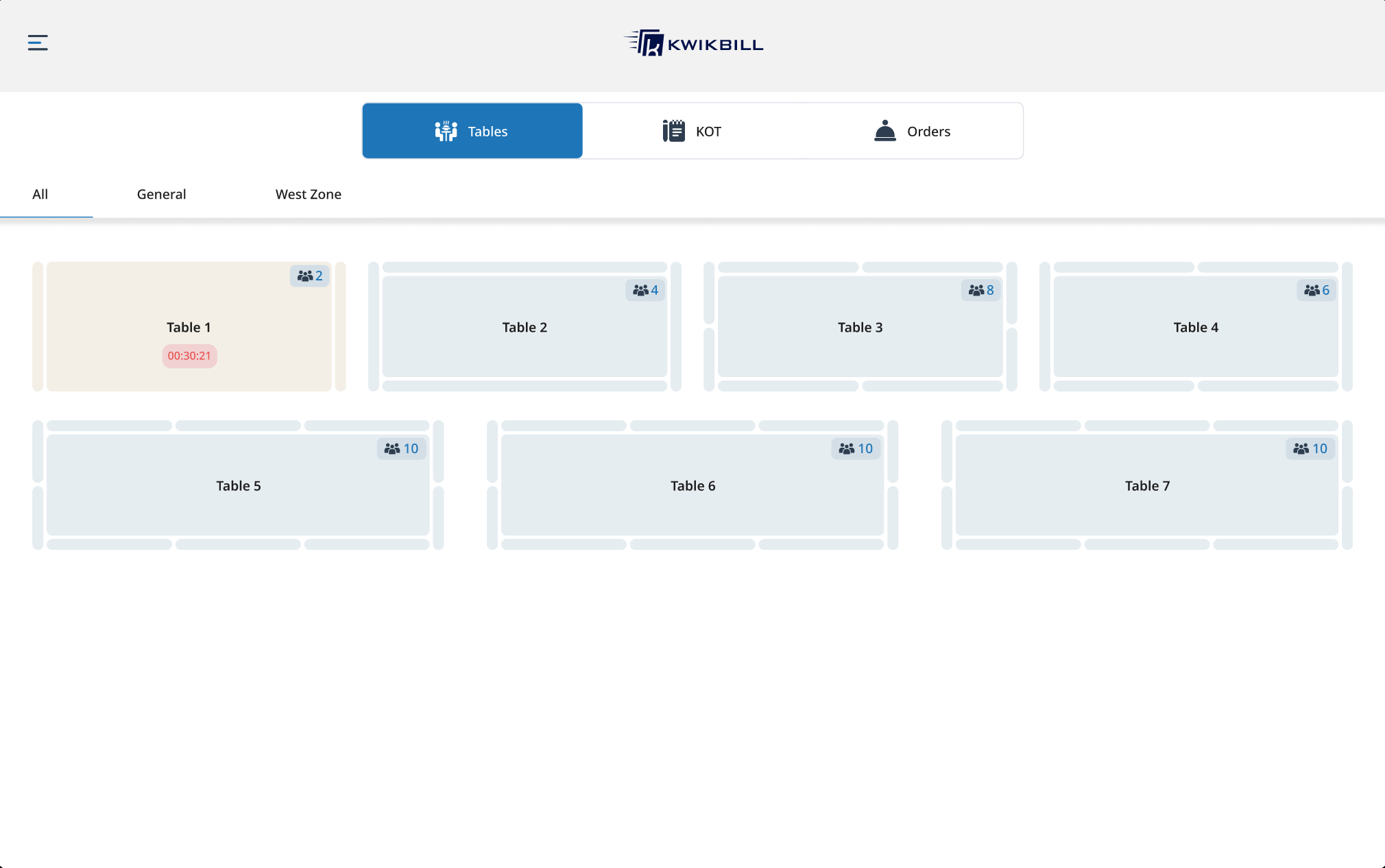
Table management with live occupancy timers
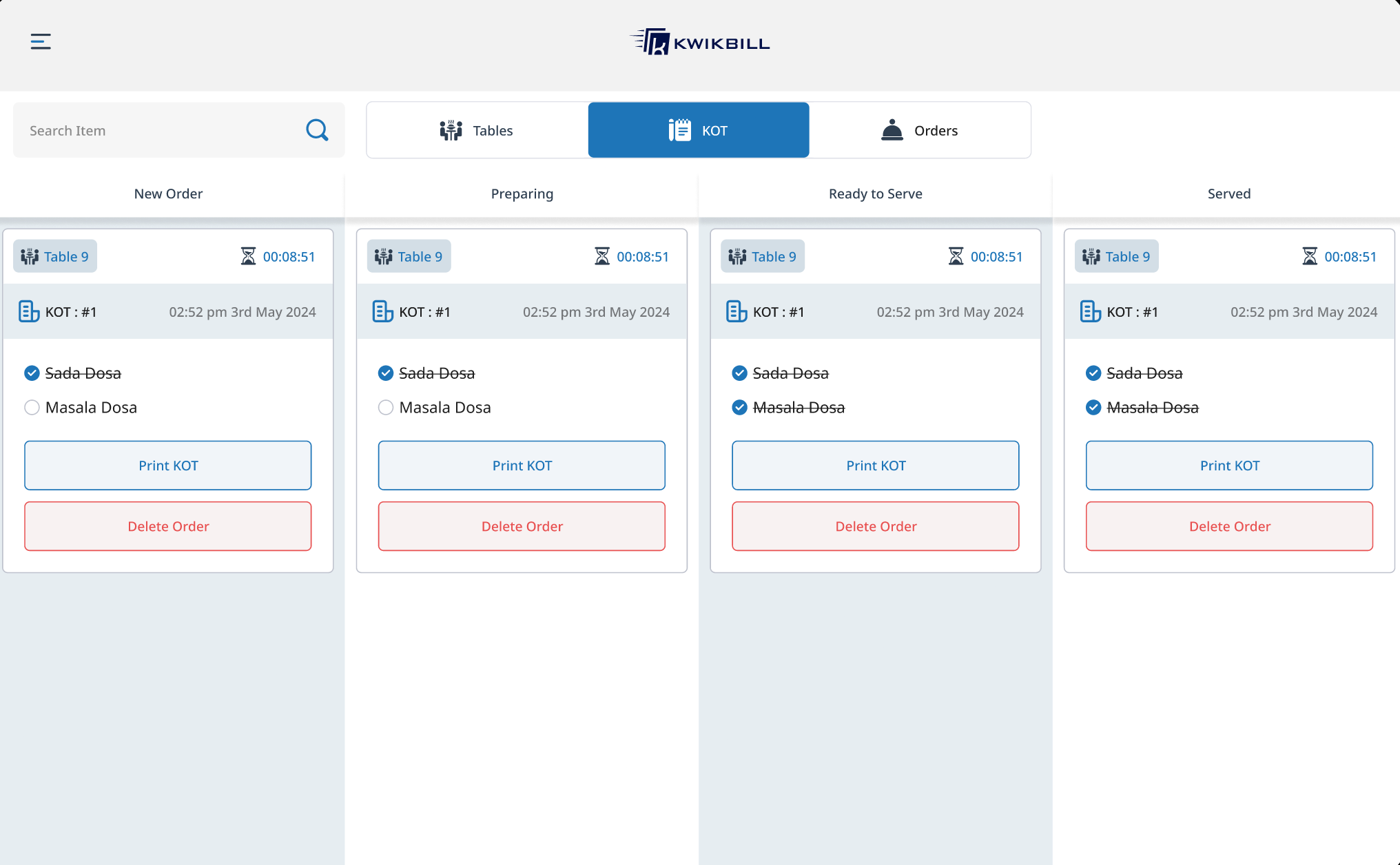
Kitchen order tickets tracked from fire to service
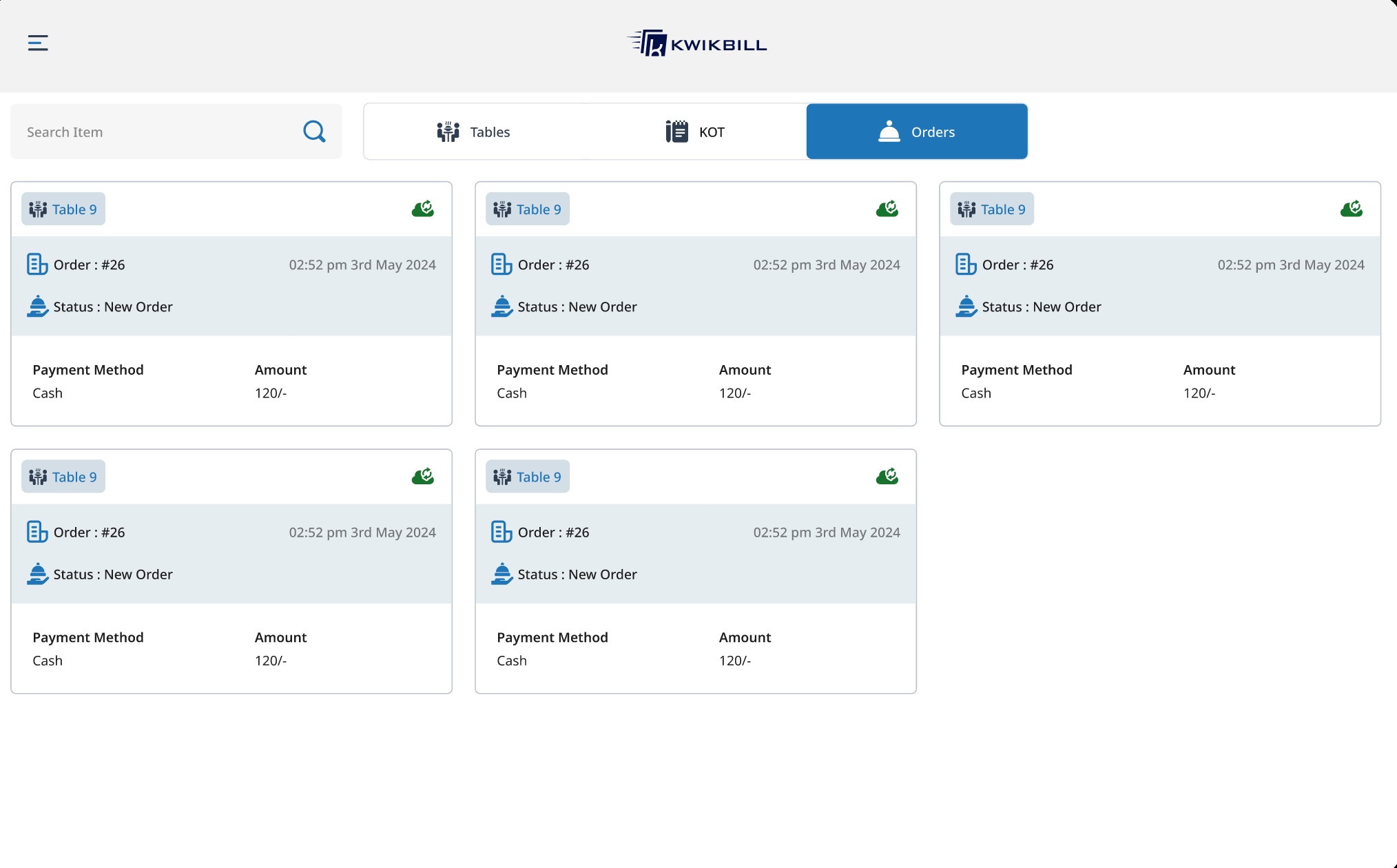
Order history with per-order sync state
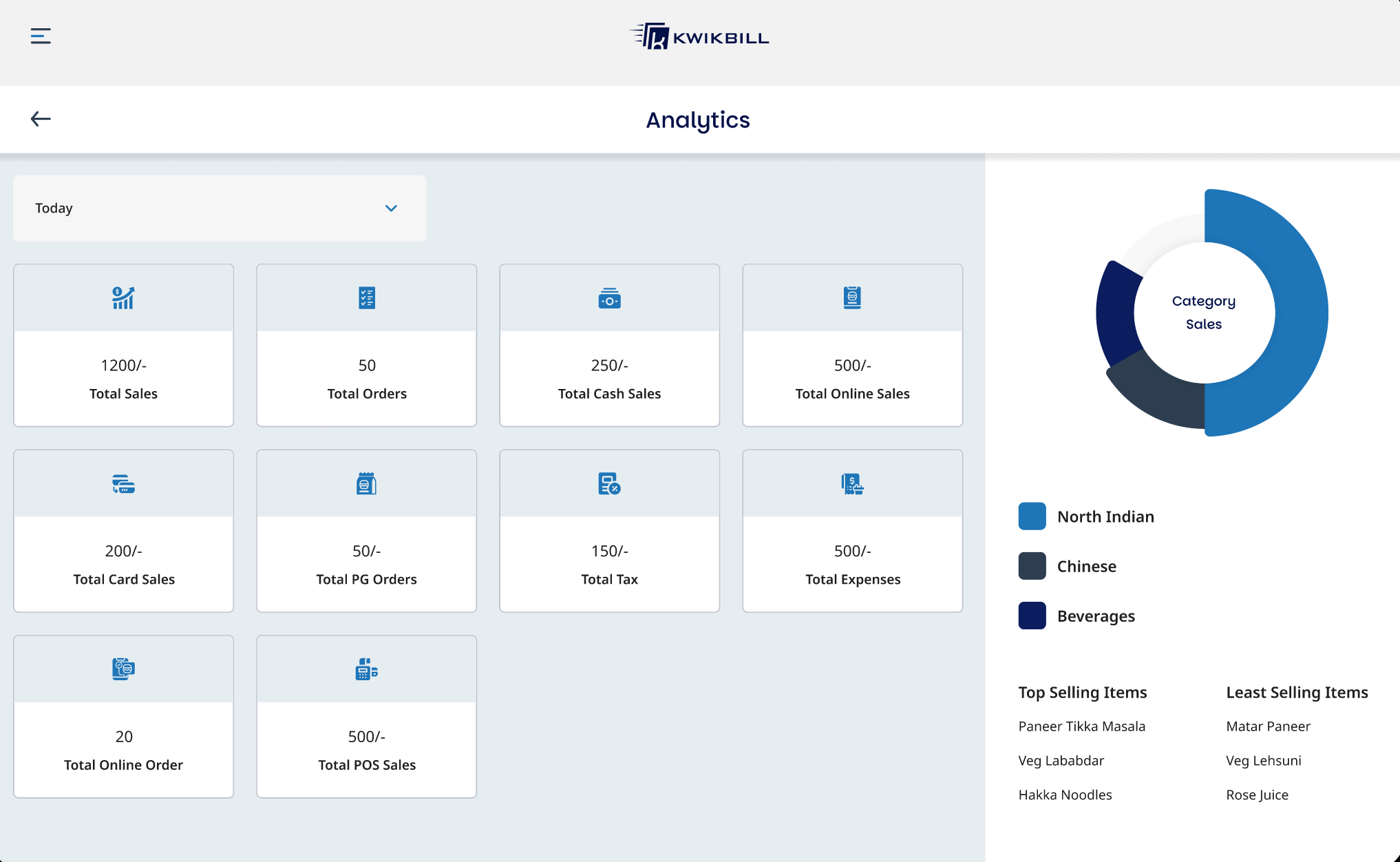
Daily analytics across sales channels and categories
- Billing continues during connectivity loss rather than halting service
- A connected desktop, mobile and backend ecosystem in place of disconnected tools
- Restaurant operations in one workflow: orders, tables, kitchen tickets and billing
- Centralised operational and sales records across devices
- A platform built for the connectivity conditions restaurants actually work in
The capabilities behind this work.
Building software that has to work in the real world?
Unreliable networks, shared devices, staff who can't stop to troubleshoot: these are engineering requirements, not edge cases. Let's engineer for them.